5 Best Reasons Load Capacity Matters in Lifting Systems?

Time:2026-10-01 Author:Mason
0%

What is the importance of load capacity in lifting systems? This question deserves more than a quick calculation. It affects equipment selection, workplace safety, operating costs, and the lifespan of every critical component. A crane, hoist, jack, or lifting beam may look powerful, yet its safe working load remains limited by design.

Ross Moloney, a recognized lifting-equipment authority and former LEEA chief executive, has emphasized, “Competence is the foundation of safe lifting.” That principle matters here. Capacity figures mean little when operators ignore load charts, uneven floors, sling angles, or shifting centers of gravity. A 2,000-kilogram load can create much higher forces when it swings or tilts. Small errors become serious quickly.

This guide explores five practical reasons load capacity matters in lifting systems. It considers stability, component wear, operational efficiency, compliance, and risk control. The details are physical and visible: a stretched sling, a deflected beam, or a hoist motor running hot. These warning signs should not be dismissed.

Capacity is not a comfort margin.

It is a boundary.

However, capacity alone cannot guarantee a safe lift. Inspection quality, operator judgment, maintenance records, and site conditions also influence the outcome. That is where this discussion becomes less convenient. A rated system may still be unsuitable for a specific lift. Engineers must question assumptions, verify measurements, and reassess changing conditions. The strongest lifting plan is not the fastest one. It is the one that remains reliable when the load behaves unexpectedly.
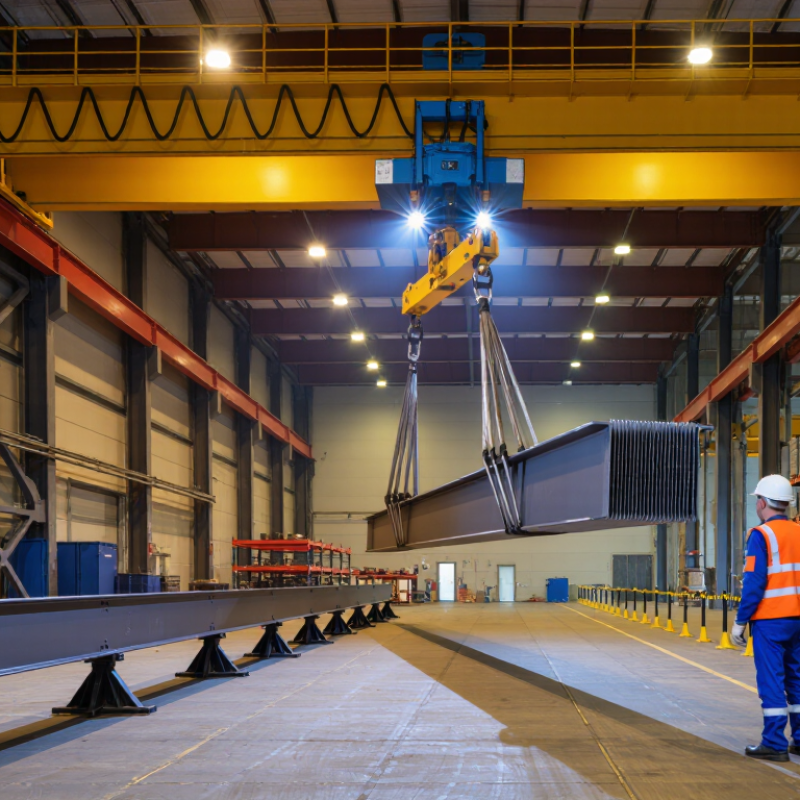
5 Best Reasons Load Capacity Matters in Lifting Systems?

Understanding Load Capacity in Lifting Systems

Understanding Load Capacity in Lifting Systems

Load capacity is the maximum weight a lifting system can safely handle under defined conditions. It is not simply the number printed on a nameplate. The rating depends on load position, lifting angle, speed, reach, and equipment condition. A 2,000-kilogram hoist may handle that weight vertically, yet a side pull can create dangerous forces. Small changes matter. The U.S. Occupational Safety and Health Administration reports an average of 72 crane-related workplace deaths each year during 2003–2008. Its safety requirements also state that rated loads must be clearly marked and never exceeded.

Capacity calculations should include the load, rigging gear, lifting accessories, and possible dynamic forces. A suspended load can swing when a vehicle stops, a hook accelerates, or wind changes direction. ISO 4301-1 classifies crane machinery by total operating time and load spectrum, showing why identical capacities may not mean identical service life. Inspection records should confirm wear, deformation, corrosion, and previous overloads. A practical weakness remains common: teams sometimes trust a capacity label without checking the complete lifting path. That assumption needs challenging. Operators should verify the center of gravity, sling angles, floor strength, and emergency controls before lifting. Even a short lift deserves measured planning. Errors become visible only after movement begins.

How Load Capacity Protects Operators and Equipment

5 Best Reasons Load Capacity Matters in Lifting Systems?

How Load Capacity Protects Operators and Equipment

Load capacity is more than a number on a nameplate. It defines how safely a hoist, sling, hook, or lifting beam can perform. The U.S. Bureau of Labor Statistics recorded 5,283 fatal work injuries in 2023. That figure covers all industries, not lifting alone. Still, it shows why controlled risks deserve serious attention.

Overloading can stretch wire ropes, deform hooks, overheat brakes, and damage supporting structures. A sudden stop may multiply the load through dynamic force. A tilted sling can increase tension sharply, even when the object’s weight seems acceptable. Capacity checks must include the load’s center of gravity, lifting angle, equipment wear, and operating environment. Small details matter.

The U.K. Health and Safety Executive reported 1.7 million workers with work-related ill health in 2023/24. Its data does not identify overload as the sole cause. However, unstable loads and repeated manual corrections can increase physical strain and operational pressure. A rated capacity is not permission to work at the limit. Experienced teams leave a practical margin, inspect contact points, and stop when conditions change. Labels can fade. Assumptions can fail. The honest question is not only, “Can it lift?” It is, “Can it lift without transferring danger to people or equipment?”

5 Best Reasons Load Capacity Matters in Lifting Systems? - How Load Capacity Protects Operators and Equipment

Practical load-capacity considerations for safer lifting-system planning and operation

Reason Key Data Dimension Verified Technical Principle Numerical Illustration Protection Provided
1. Prevents overload Working Load Limit (WLL) versus actual lifted load The lifted load must not exceed the lowest WLL of any load-bearing component, including the lifting machine, rigging, hooks, shackles, and attachments. If a lifting system contains components rated at 5.0 t, 4.0 t, and 3.2 t, the system’s limiting capacity is 3.2 t before any configuration or environmental reductions. Reduces the risk of structural failure, dropped loads, permanent deformation, and sudden equipment damage.
2. Controls sling-leg forces Sling angle measured from the horizontal For two equal sling legs supporting a centered load, the tension in each leg is calculated as T = W ÷ (2 × sin θ), where W is the load and θ is the angle from horizontal. For a 10 kN load:
60°: 5.77 kN per leg
45°: 7.07 kN per leg
30°: 10.00 kN per leg
Shows why shallow sling angles increase tension and can overload slings, hooks, lifting points, or the supporting structure.
3. Maintains stability Center of gravity, load offset, and overturning moment Overturning moment is calculated as M = W × d, where W is the load force and d is the horizontal distance from the tipping point. A 20 kN load positioned 0.5 m from a tipping edge creates a moment of 10 kN·m. Increasing the offset to 1.0 m doubles the moment to 20 kN·m. Helps prevent crane or lifting-device tipping, uncontrolled rotation, side loading, and load swing toward personnel.
4. Protects supporting surfaces Ground or floor bearing pressure Bearing pressure is calculated as P = F ÷ A, where F is the applied force and A is the effective support area. The result must be checked against the verified capacity of the floor or ground. A 100 kN reaction supported by a 0.25 m² pad produces 400 kPa of average pressure, excluding uneven contact, dynamic effects, and soil variability. Reduces the possibility of outrigger settlement, floor damage, structural deflection, and sudden loss of machine stability.
5. Preserves equipment service life Rated capacity, inspection condition, and operating environment Rated capacity applies only to the stated configuration and acceptable condition. Wear, corrosion, heat, sharp edges, shock loading, side loading, and abnormal loading can reduce safe capability and require removal from service or engineering review. A 3.0 t rated sling does not automatically provide 3.0 t capacity in every arrangement; the applicable hitch, angle, edge protection, temperature limits, and inspection requirements must be confirmed before use. Limits fatigue, cracking, accelerated wear, deformation, and repeat overloads that can shorten the working life of lifting equipment.
Planning note: All numerical examples are engineering illustrations. Before lifting, confirm the actual load mass, center of gravity, lifting configuration, component ratings, inspection status, environmental conditions, and applicable local safety requirements.

The Role of Load Capacity in Lifting Stability

5 Best Reasons Load Capacity Matters in Lifting Systems?

The Role of Load Capacity in Lifting Stability

Load capacity is not just a number on a specification plate. It controls how safely a lifting system manages weight, movement, and changing forces. A properly rated system keeps the load within its intended working range. This protects the structure, lifting components, and nearby workers.

Stability can change quickly. A suspended load may swing when wind catches a broad panel. An uneven object can shift its center of gravity during elevation. These moments create side forces that a simple weight calculation may miss. Staying below the rated working load leaves a practical safety margin. It also reduces stress on hooks, ropes, chains, brakes, and support points. Small details matter.

A reliable assessment checks the load weight, lifting angle, travel path, and attachment condition. Inspections should look for stretched links, damaged wire, worn hooks, and loose connections. The working surface matters too. Soft ground or an uneven floor can tilt the equipment and reduce stability. Never guess the weight when records are unclear. Use verified information or a suitable weighing method. I have noticed that rushed planning often treats capacity as a final check, rather than a starting point. That habit deserves reconsideration. Rated capacity does not guarantee stability by itself. Operators still need trained judgment, clear communication, and controlled movement. Even a light load can become dangerous when lifted too fast or positioned off-center.

5 Best Reasons Load Capacity Matters in Lifting Systems

The Role of Load Capacity in Lifting Stability

This chart shows how overturning moment increases as a lifted load approaches the rated capacity. The values are calculated using the engineering relationship M = m × g × d, with a rated capacity of 1,000 kg, a horizontal load distance of 1 m, and gravitational acceleration of 9.81 m/s². Actual safe capacity must also consider the equipment design, load center, lifting height, ground conditions, dynamic forces, and applicable safety requirements.

  1. Prevents overload: Staying within the rated capacity helps protect lifting components from excessive stress.
  2. Improves stability: Lower load utilization reduces overturning moment and helps maintain the equipment’s center of gravity.
  3. Controls deflection: Appropriate capacity limits reduce unwanted bending, swinging, and structural deformation.
  4. Supports braking and movement: Capacity planning helps account for additional forces created during acceleration, stopping, or turning.
  5. Protects people and loads: Correct capacity selection reduces the likelihood of dropped loads, tip-over events, and equipment damage.

How Capacity Limits Improve Operational Efficiency

5 Best Reasons Load Capacity Matters in Lifting Systems

How Capacity Limits Improve Operational Efficiency

A lifting system works efficiently when its capacity matches the real load. Clear limits prevent overloads, reduce unplanned stoppages, and protect operators from avoidable risks. In practice, this also improves scheduling. Crews can select suitable equipment before a heavy component reaches the work area. Less waiting follows. Capacity limits also reduce mechanical strain, helping extend service life and control maintenance costs. However, rated capacity is not a target. It is a boundary that includes load weight, attachments, movement, and working conditions.

Accurate capacity checks improve consistency across shifts. Operators can follow the same lifting plan instead of relying on memory or guesswork. This supports better training and more reliable records. Digital load monitoring can reveal repeated overload trends before failures occur. Yet data is not perfect. Sensors may drift, and workers may enter incorrect weights. Regular inspections, practical training, and independent verification remain essential. A small error can change the entire lifting decision.

Tips: Confirm the load weight, center of gravity, and attachment rating before lifting. Keep the load within a conservative working margin. Inspect hooks, slings, brakes, and controls at scheduled intervals. Record near misses, even when no damage occurs. Those details often expose weak planning. Good systems encourage questions, not silent confidence.

Maintaining Safe Performance Through Proper Capacity Management

5 Best Reasons Load Capacity Matters in Lifting Systems?

Maintaining Safe Performance Through Proper Capacity Management

Load capacity determines whether a lifting system can perform safely under real working conditions. The rated limit is not a target. It is a boundary. Engineers must consider the load’s weight, center of gravity, lifting angle, and attachment points before operation. A 2,000-kilogram load may create greater force when it swings or shifts suddenly.

Proper capacity management also protects equipment from gradual damage. Repeated overloads can stretch components, deform hooks, and weaken supporting structures. These changes may remain invisible during a quick visual check. Inspection records, load testing, and maintenance history provide stronger evidence than appearance alone. In practice, accurate records often reveal problems before a failure occurs.

Conditions can change within minutes. Wind, uneven floors, temperature, and poor load placement can reduce safe performance. Operators should verify the working load limit of every sling, shackle, hoist, and anchor point. The weakest component controls the system. That detail is easy to miss. It deserves a deliberate check.

A qualified professional should review unusual lifts, unclear specifications, and complex load paths. Calculations should be based on verified data, not rough assumptions. I have seen how small measurement errors can influence an entire lifting plan. That is uncomfortable, but useful. Capacity management requires repeated attention, honest reporting, and the willingness to pause when conditions no longer match the plan.

FAQS

What does load capacity mean in a lifting system?

Load capacity is the maximum weight a system can safely handle under defined conditions. It includes the load, rigging gear, accessories, and dynamic forces.

Is the number on a capacity label always safe to use?

No. The rating changes with lifting angle, load position, speed, reach, and equipment condition. Labels can fade or become incomplete.

Can a 2,000-kilogram hoist lift 2,000 kilograms in every direction?

No. It may handle that weight vertically, but side pulling can create dangerous forces. Direction matters.

Why should lifting angles be checked?

A tilted sling can sharply increase tension. The object may weigh 500 kilograms, yet each sling leg can experience much higher force.

What equipment details should be inspected before lifting?

Check ropes, hooks, slings, brakes, contact points, and supporting structures. Look for wear, deformation, corrosion, and previous overloads.

How can movement increase the actual lifting force?

Sudden stops, fast hook movement, swinging, and wind can create dynamic forces. The load may briefly act heavier than its static weight.

What should operators verify before a short lift?

Confirm the center of gravity, sling angles, floor strength, lifting path, and emergency controls. Even a short lift deserves planning.

Should a team operate exactly at the rated capacity?

Usually, no. A rated capacity is not a target. Experienced teams leave a practical margin and stop when conditions change.

What happens when a load becomes unstable during lifting?

Stop movement and lower the load if it can be done safely. Do not correct a swinging load by hand. That shortcut can fail.

Why are inspection records important?

Records reveal repeated overloads, worsening wear, and missed repairs. They also challenge the assumption that familiar equipment is automatically safe.

Conclusion

Load capacity is a fundamental factor in every lifting system because it defines the maximum weight that equipment can safely handle under specific operating conditions. Understanding what is the importance of load capacity in lifting systems helps organizations choose suitable equipment, prevent overloads, and protect both operators and machinery. When the rated capacity is respected, lifting operations become more stable, reducing the risk of swinging loads, structural stress, tipping, or unexpected equipment failure.

Proper capacity management also improves operational efficiency. Planning loads accurately minimizes delays, prevents repeated lifting attempts, and supports smoother workflows. To maintain safe and reliable performance, operators should consider the load’s weight, shape, balance, lifting height, and environmental conditions before each task. Regular inspections, clear capacity markings, routine maintenance, and appropriate training further ensure that lifting systems continue to perform within their intended limits. Ultimately, respecting load capacity is essential for safety, productivity, equipment longevity, and consistent lifting performance.

Mason

Mason

Mason is a seasoned marketing professional with a deep expertise in the company's offerings and a passion for driving brand awareness. With a strong background in digital marketing strategies, he has an innate ability to connect with diverse audiences and effectively communicate product benefits.......