Which Equipment Is Best for Warehouse Operations in 2026?

Time:2026-10-21 Author:Aria
0%

Warehouse operations in 2026 will demand faster movement, safer handling, and better use of limited floor space. Distribution centers are managing more product varieties, shorter delivery windows, and changing customer expectations. Equipment choices must support these pressures without creating unnecessary complexity.

The real question is which equipment is suitable for warehouse operations across changing products, layouts, skills, and order volumes. Counterbalance forklifts may serve pallet storage well, while reach trucks can improve access in taller aisles. Pallet jacks remain practical for short-distance movement. Conveyor systems can reduce walking, but they require careful planning and dependable maintenance. Automated mobile robots may improve picking speed in large facilities, although their return on investment depends on workflow design and volume.

Safety comes first.

Reliable decisions begin with evidence from the warehouse floor. Managers should review travel distances, lifting frequencies, aisle widths, battery charging areas, and near-miss reports. A short observation can reveal problems that software misses. For example, a picker may walk hundreds of extra steps because fast-moving cartons sit too far from packing stations. That detail can influence equipment selection more than a polished product brochure.

No single machine fits every operation. Even a technically advanced system can underperform when workers receive limited training or when maintenance support is weak. This article examines forklifts, pallet trucks, conveyors, storage equipment, and automation options for 2026. It also considers operating costs, ergonomics, energy use, flexibility, and measurable safety performance. Some recommendations may need adjustment. Warehouse conditions rarely remain static.
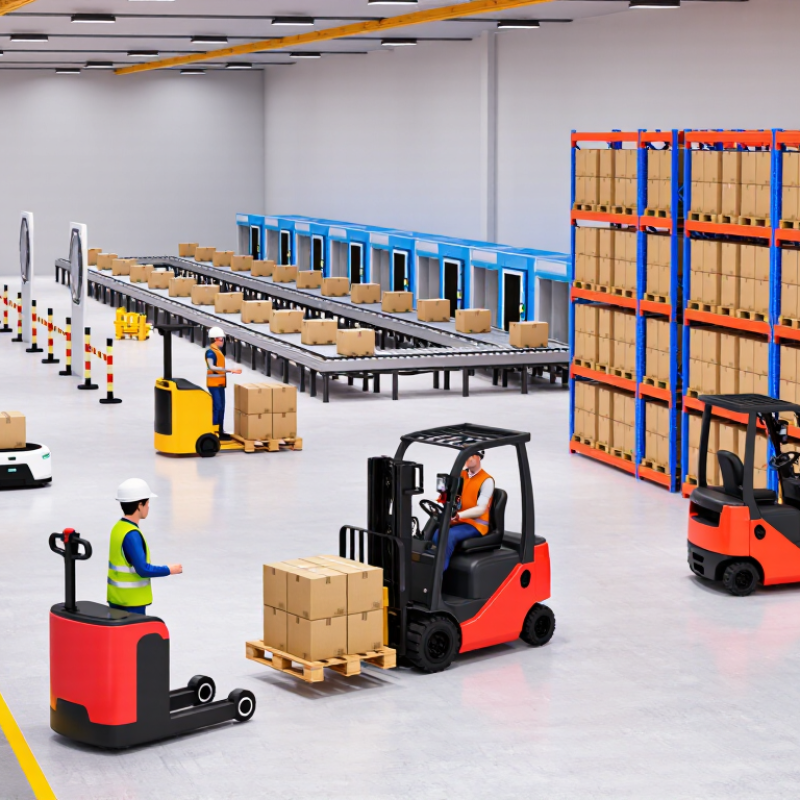
Which Equipment Is Best for Warehouse Operations in 2026?

Warehouse Equipment Needs in 2026: Core Tasks and Operating Conditions

Which Equipment Is Best for Warehouse Operations in 2026?

Warehouse Equipment Needs in 2026: Core Tasks and Operating Conditions

Choosing warehouse equipment in 2026 starts with daily tasks, not fashionable technology. A facility handling full pallets needs stable lifting equipment and clear travel lanes. An e-commerce site needs compact order-picking tools, shelving, and short-distance transport. For repetitive movement, powered pallet trucks can reduce physical strain and improve loading speed. Manual carts still work well in narrow areas and during occasional transfers.

Operating conditions often decide more than product volume. Cold rooms require equipment that performs reliably at low temperatures. Dusty floors demand protected components and simple cleaning access. Uneven surfaces can increase vibration, tire wear, and operator fatigue. Aisle width also matters; larger vehicles may seem productive but create turning delays. Measure door heights, rack clearances, floor strength, and charging space before making a purchase.

In practical warehouse assessments, I check the busiest hour rather than the daily average. Peak pressure exposes weak batteries, poor layouts, and rushed decisions. Safety features, visibility, braking response, and operator training deserve equal attention. A quiet machine is not automatically a safer machine. Automation may improve consistency, yet it can become expensive when workflows change. I have seen teams overbuy equipment for rare peaks and underinvest in routine picking. That mistake remains common. Flexible tools may be less impressive, but they often fit real working conditions better.

Material Handling Equipment for Receiving, Storage, and Order Picking

Which Equipment Is Best for Warehouse Operations in 2026?

Material Handling Equipment for Receiving, Storage, and Order Picking

Warehouse equipment should match each movement, not follow automation trends. For receiving, electric pallet trucks reduce unloading effort and improve control around dock doors. Counterbalance forklifts handle heavier pallets, while dock levelers support safer transfers. The MHI 2024 Annual Industry Report found that 83% of supply chain professionals consider technology and innovation highly important. Yet, practical fit still matters more than expensive features.

For storage, reach trucks suit narrow aisles and tall racking. Pallet shuttles can improve density where inventory moves in predictable patterns. For order picking, pick-to-light systems, conveyors, and autonomous mobile robots can reduce walking distance. However, these tools need accurate inventory data and clear pedestrian routes. The International Federation of Robotics reported 541,302 industrial robot installations worldwide in 2023. That figure shows strong automation momentum, but warehouse needs are different. I would not automate every aisle. That assumption deserves testing.

Tips: Measure travel time before selecting equipment. Record pallet weights, aisle widths, pick rates, and battery needs. Train operators on daily inspections. Keep manual alternatives for peak periods or system downtime. A simple pallet cart may outperform advanced equipment in a low-volume zone. Review the choice after ninety days, because real traffic often exposes planning errors.

Which Equipment Is Best for Warehouse Operations in 2026?

Representative rated load capacities for common material handling equipment used in receiving, storage, and order picking.

Counterbalance forklifts are typically suited to heavy receiving and put-away tasks, while reach trucks provide efficient vertical storage in narrow aisles. Electric pallet trucks support frequent pallet movement, and order pickers are designed for case- and piece-picking workflows. Actual capacity depends on lift height, load center, aisle width, battery configuration, and operating conditions.

Automation, Robotics, and Smart Systems for Modern Warehouses

Which Equipment Is Best for Warehouse Operations in 2026?

Automation, Robotics, and Smart Systems for Modern Warehouses

In 2026, effective warehouse equipment should connect physical movement with reliable data. Autonomous mobile robots can carry totes between storage, picking, and packing areas. Robotic arms can handle repetitive picking when products have consistent shapes. Automated storage and retrieval systems also improve space use in high-volume facilities. However, these systems need accurate inventory records and clearly marked routes. During warehouse trials, small barcode errors often caused larger delays than expected. Automation is not magic.

Smart warehouse software should coordinate robots, conveyors, scanners, and human workers in real time. Sensors can monitor congestion, temperature, equipment movement, and battery levels. A dashboard should show practical details, such as delayed orders or blocked aisles. Human employees still matter. They handle unusual products, damaged packages, and decisions that software may misunderstand. A flexible system usually performs better than a fully automated design built around perfect conditions.

Tips: Start with one measurable workflow, such as replenishment or tote transport. Record walking distance, picking accuracy, downtime, and training hours. Test emergency stops and manual controls before expanding. Keep spare sensors and charging capacity available. Review the data weekly, but question it when warehouse conditions change. A pilot may reveal that better labeling is more valuable than another robot.

Safety, Energy Efficiency, and Workforce Considerations

In 2026, the best warehouse equipment will balance safety, energy use, and human judgment. Electric lift trucks can reduce onsite emissions and indoor exhaust exposure. However, batteries still require charging space, ventilation, and disciplined inspection. The U.S. Occupational Safety and Health Administration estimates that powered industrial trucks cause about 35,000 serious injuries annually. That figure makes speed a poor purchasing strategy. Choose equipment with speed limits, visibility aids, pedestrian detection, and stable load handling.

Energy performance needs measurement, not marketing language. The U.S. Department of Energy reports that efficient motor systems can significantly reduce industrial electricity consumption. In practice, operators should compare charging losses, idle power, battery life, and maintenance needs. Motion-controlled LED lighting and smart charging can reduce wasted energy in quiet aisles. Small savings become visible on monthly utility bills. Yet, a highly automated system may consume more power than expected during low-volume periods.

Workforce design matters equally. MHI’s 2024 Annual Industry Report found that 83% of respondents expected to adopt robotics and automation within five years. Collaborative mobile robots can reduce walking and repetitive transport tasks, but they cannot replace clear training. Workers still need emergency procedures, manual handling skills, and time to report near misses. I would not assume automation removes risk. Poorly planned routes can create new collision points. A practical trial should measure injury exposure, energy use, training time, and operator feedback before expansion.

How to Select the Best Equipment for a Specific Warehouse Operation

Selecting warehouse equipment in 2026 should begin with the operation, not the catalog. A pallet storage area needs different tools from a packing bench or a narrow picking aisle. Measure load weights, travel distances, aisle widths, floor conditions, and daily volume. Observe the busiest shift in person. A device that works well at 8 a.m. may struggle badly after lunch.

Match equipment capacity to real working conditions. Include the load, attachments, turning space, and expected duty cycle. For frequent picking, ergonomic lift tables or adjustable workstations can reduce bending. For long internal transport, choose equipment with suitable battery endurance and safe braking control. Check visibility around corners. Small details matter. Operators notice them first. Their feedback is valuable, though it may be incomplete or influenced by habit. Test equipment during a normal shift before making a final decision.

Tips: Compare total operating cost, not only purchase price. Review maintenance access, spare-part availability, training needs, noise, and energy use. Keep clear inspection records and replace damaged components quickly. Leave space for future volume changes. This is where many plans fail. A slightly higher-capacity option may prevent congestion, but oversized equipment can waste aisle space and increase handling time. Recheck your choice after several weeks, because real warehouse behavior often differs from the original plan.

Which Equipment Is Best for Warehouse Operations in 2026? — How to Select the Best Equipment for a Specific Warehouse Operation
Equipment Type Best-Suited Warehouse Operation Typical Load Capacity Typical Travel Speed Recommended Aisle Width Typical Lift Height Energy or Power Option Automation Potential Key Selection Criteria
Manual Pallet Truck Short-distance pallet movement, loading docks, and low-volume storage areas 2,000–2,500 kg Up to 4.5 km/h manually operated 2.4–3.0 m Up to 0.2 m Human-powered hydraulic system Very low Best for low purchase cost, occasional movement, simple layouts, and short travel distances
Electric Pallet Truck Frequent horizontal pallet transport, order staging, and dock-to-storage movement 1,500–3,000 kg 4–12 km/h 2.5–3.2 m Up to 0.2 m Rechargeable lead-acid or lithium-ion battery Medium to high Choose when travel distance, throughput, operator fatigue, or shift length makes manual handling inefficient
Reach Truck High-density pallet storage in narrow aisles and selective racking 1,000–2,500 kg 10–14 km/h 2.5–3.0 m 6–13 m Electric battery Medium Suitable for tall racks, indoor operations, and facilities where storage density is more important than outdoor versatility
Counterbalance Forklift General pallet handling, truck loading, unloading, and mixed indoor/outdoor work 1,500–5,000 kg 12–20 km/h 3.4–4.0 m 3–7 m Electric, LPG, diesel, or other approved industrial power systems Medium Select according to load weight, surface conditions, emissions requirements, duty cycle, and required lift height
Very Narrow Aisle Truck High-density pallet storage where every square meter of floor space is valuable 1,000–1,500 kg 6–12 km/h 1.6–2.0 m 10–18 m Electric battery Medium to high Requires carefully designed rack layouts, smooth floors, trained operators, and compatible guidance systems
Order Picker Piece-picking and case-picking from low, medium, or high storage locations 500–1,500 kg platform load 7–12 km/h 2.4–3.2 m 1.2–10 m, depending on model Electric battery Medium Best when order lines are high, products are picked individually, and ergonomic access is important
Tow Tractor Moving multiple carts or roll cages across long warehouse routes 2,000–50,000 kg towing capacity Up to 15–25 km/h 3.0–4.5 m Not applicable Electric battery or internal-combustion power system High Effective for repetitive milk-run routes, production supply, airport-style logistics, and multi-stop replenishment
Automated Guided Vehicle Repeatable pallet or tote transport between receiving, storage, production, and shipping zones 500–2,000 kg per vehicle 1–2 m/s Depends on vehicle and route design Usually floor-level; lift models vary Rechargeable battery with automated charging options High Choose when routes are stable, traffic rules can be standardized, and warehouse-control integration is available
Autonomous Mobile Robot Flexible tote transport, goods-to-person workflows, and dynamic order fulfillment 100–1,500 kg per unit 1–2 m/s Often 1.8–3.0 m, depending on layout Floor-level or integrated lift module Rechargeable lithium-ion battery Very high Useful where routes change frequently, order profiles are variable, and phased automation is preferred
Conveyor System Continuous movement of cartons, totes, parcels, and cases between fixed process areas Typically 25–100 kg per item 0.3–2.0 m/s Designed into the facility layout Fixed installation Electric motors with variable-speed control High Best for high-volume, predictable flows; evaluate noise, maintenance access, accumulation needs, and layout flexibility
Vertical Lift Module Compact storage and retrieval of small parts, tools, and high-value inventory Up to approximately 500 kg per tray Varies by system configuration Footprint commonly 2–4 m wide Commonly 3–14 m system height Electric motor and control system High Suitable where vertical space is available and secure, ergonomic access to many small SKUs is required
Scissor Lift Table Ergonomic pallet positioning, packing, maintenance, and height-adjustable workstations 500–3,000 kg Stationary or low-speed positioning Work-area dependent Typically 0.8–2.0 m lift range Electric hydraulic or pneumatic system Low to medium Select based on platform size, load center, lift cycle frequency, safety guarding, and ergonomic requirements
Selection note: Final equipment selection should be validated against actual load dimensions and weights, aisle geometry, floor quality, rack configuration, travel distance, shift pattern, charging infrastructure, operator training, safety rules, maintenance capability, and expected throughput. Capacity and performance figures are typical planning ranges and may vary by configuration and operating conditions.

FAQS

How should a warehouse choose equipment in 2026?

Start with daily tasks, not fashionable technology. A full-pallet area needs stable lifting equipment and clear travel lanes. An e-commerce operation may need compact picking tools and shelving. Match the equipment to real work.

What measurements should be taken before purchasing equipment?

Measure aisle widths, door heights, rack clearances, and floor strength. Check charging space and turning areas too. A larger vehicle may look productive. It can still create delays in tight corners.

Why should warehouses study the busiest shift?

Daily averages can hide serious problems. Watch the busiest hour instead. Peak pressure exposes weak batteries, poor layouts, and rushed decisions. The morning test may look fine, but afternoon work can feel different.

Which equipment suits frequent pallet movement?

Powered pallet trucks can reduce physical strain during repetitive movement. They may also improve loading speed. Select suitable battery endurance and braking control. Manual carts remain useful in narrow areas and occasional transfers.

How can equipment support safer and easier order picking?

Ergonomic lift tables and adjustable workstations can reduce bending. Keep visibility clear around corners. Check braking response and operator controls. Small improvements matter. Operators usually notice them first.

How do operating conditions affect equipment selection?

Cold rooms require equipment that works reliably at low temperatures. Dusty floors need protected components and easy cleaning access. Uneven surfaces can increase vibration, tire wear, and fatigue. Conditions matter more than product volume sometimes.

Should a warehouse buy oversized equipment for future growth?

Leave room for future volume changes, but avoid buying too large. Oversized equipment can waste aisle space and increase handling time. A slightly higher capacity may prevent congestion. This judgment is not always easy.

What costs should be reviewed beyond the purchase price?

Compare maintenance access, spare-part availability, training, noise, and energy use. Include battery needs and inspection time. Keep clear records. Replace damaged components quickly. A cheap purchase can become expensive later.

Conclusion

Warehouse operations in 2026 will require equipment that supports faster workflows, accurate inventory handling, safer working conditions, and greater adaptability. The right solution may include pallet trucks, forklifts, reach equipment, conveyors, shelving systems, order-picking platforms, and loading equipment for receiving, storage, replenishment, and dispatch. Warehouses with high order volumes may also benefit from automated storage systems, mobile robots, sensors, and warehouse management software that improve visibility and reduce repetitive manual tasks.

To determine which equipment is suitable for warehouse operations, businesses should evaluate building layout, load sizes, storage height, order profiles, floor conditions, operating hours, workforce skills, and expected growth. Safety features, energy consumption, maintenance requirements, and total operating costs are equally important. A balanced equipment plan should combine practical material-handling tools with smart technology where it delivers measurable value, while ensuring employees receive appropriate training and can work comfortably and safely.

Aria

Aria

Aria is a dedicated marketing professional with a deep passion for innovative strategies and a keen understanding of our company's product offerings. With a wealth of experience in the industry, Aria excels at crafting engaging content that highlights the unique features and benefits of our......